**Outline:**
**1. Introduction – The Battle for Your Living Room**
**2. What Exactly Is IPTV? (And Why Cable Is Crying)**
**3. Cable TV: The Old Guard That Won’t Go Quietly**
**4. IPTV vs Cable TV 2026 – Head-to-Head Comparison**
– **Price: Who’s Cheaper?**
– **Channel Selection: Quantity vs. Quality**
– **Flexibility: Watch Anywhere or Stuck on a Couch**
– **Picture Quality: 4K, HDR, and the Latency Trap**
– **Reliability: Buffering vs. Blackouts**
– **Setup: DIY vs. Technician Visit**
5. **Why IPTV Trends Wins the Cord-Cutting War**
6. **Real Talk: When Cable Still Makes Sense**
7. **FAQs – Everything You Wanted to Ask but Were Afraid to Google**
8. **Conclusion – Your Remote, Your Rules**
—
Introduction – The Battle for Your Living Room
Picture this: It’s a Friday night in 2026. You’re sprawled on the couch, remote in hand, ready to binge the latest season of that show everyone’s talking about. But there’s a catch. Your cable bill just went up again – for the fifth time this year. Meanwhile, your neighbor, the one who always seems one step ahead, is streaming the same show on three different devices while saving $80 a month. How? They joined the IPTV vs cable TV 2026 revolution.

I’ve been there. I remember the days of wrestling with coaxial cables, missing episodes because the DVR didn’t record, and paying for 200 channels I never watched. That’s the old way. The new way? Internet Protocol Television – IPTV. And in 2026, the gap between IPTV and traditional cable has never been wider. Let’s break it down, shall we?
Wanna try out our IPTV service ? Click HERE and get an IPTV FREE Trial Account NOW !
What Exactly Is IPTV? (And Why Cable Is Crying)
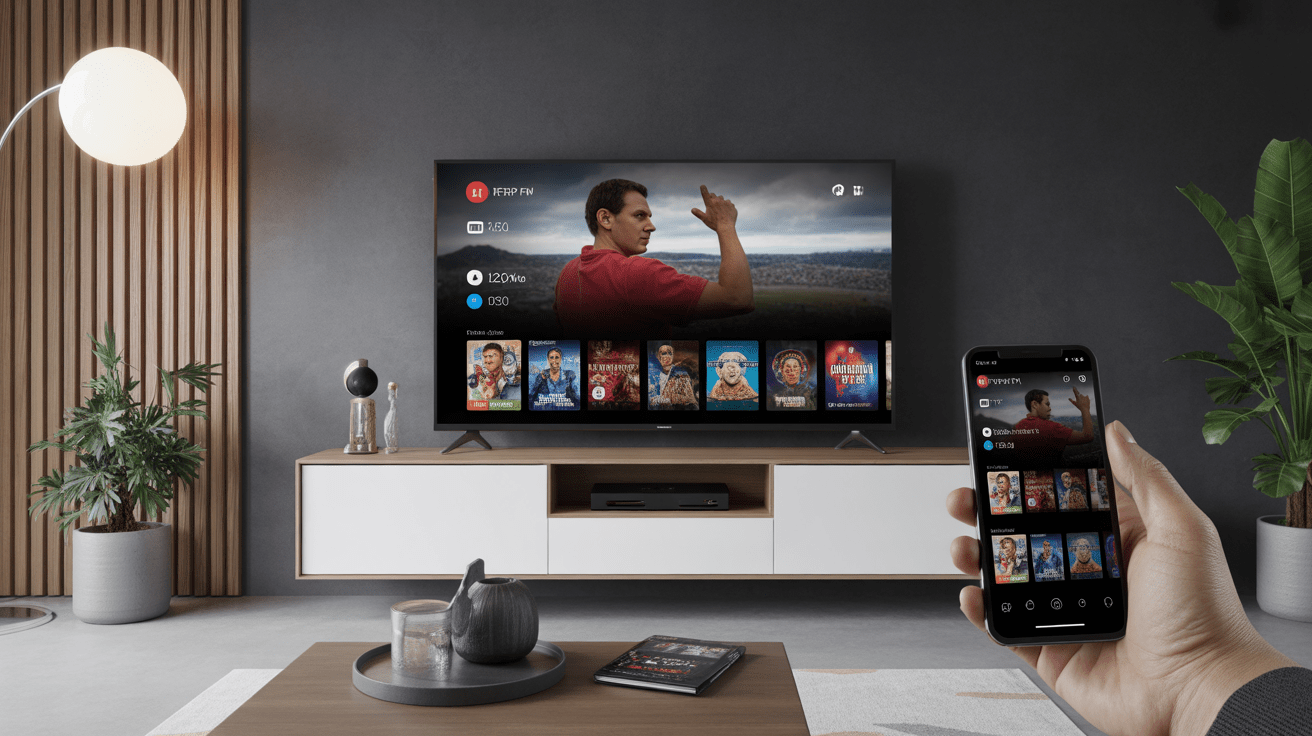
If cable TV is a rigid, old-school postman delivering a fixed set of letters every day, IPTV is your own private internet courier bringing exactly what you want, when you want it. IPTV uses your internet connection to stream live TV and on-demand content directly to your device – no satellite dish, no cable box, no annual contract.
Think of it like this: Cable is a buffet where you pay for the whole spread even if you only eat the mashed potatoes. IPTV is a à la carte menu – you pick your channels, your movies, your sports packages, and you only pay for what you actually consume. Crazy, right?
Services like IPTV Trends have perfected this model. With thousands of channels from every corner of the globe, 4K streaming, and the ability to watch on your TV, phone, tablet, or laptop – all for a fraction of a cable subscription – it’s no wonder the IPTV vs cable TV 2026 debate is already decided for millions.
Cable TV: The Old Guard That Won’t Go Quietly
Let’s not be unfair. Cable television has been the backbone of home entertainment for decades. It brought us live news, sports events, and the comforting glow of reruns on a rainy Sunday. But like a flip phone in an age of smartphones, cable is showing its age.
In 2026, cable companies are still clinging to outdated practices: hidden fees, equipment rentals, multi-year contracts, and price hikes that make you feel like you’re funding a small country. According to a recent FCC report, the average cable bill has risen by over 40% in the last five years. Meanwhile, internet speeds have doubled, and IPTV subscriptions have become cheaper than ever.
Cable does have one advantage – reliability in areas with poor internet infrastructure. If your connection is slower than a tortoise in molasses, cable might still be your only option. But for the rest of us, it’s time to move on.
Wanna try out our IPTV service ? Click HERE and get an IPTV FREE Trial Account NOW !
IPTV vs Cable TV 2026 – Head-to-Head Comparison
Enough chit-chat. Let’s put these two giants in the ring and see who comes out swinging. I’ve created a quick comparison table to help you visualize the differences at a glance.
| Feature | IPTV (e.g., IPTV Trends) | Cable TV |
|---|---|---|
| Monthly Cost | $10 – $30 (no hidden fees) | $80 – $200+ (plus fees) |
| Channels | 10,000+ (global) | 200–300 (mostly local) |
| Contracts | None (cancel anytime) | 1–2 year commitment |
| 4K / HDR | Yes (most content) | Limited, often extra cost |
| Watch on Mobile | Yes, multi-device | Rarely, or with add-ons |
| On-Demand Library | Massive (movies, series, sports) | Small, limited |
| Setup Difficulty | Easy (download app or use M3U) | Requires technician visit |
| Reliability | Depends on internet speed | Consistent but prone to outages |
See the pattern? IPTV knocks cable out in almost every round. But let’s dig into the details because I know you love details.
Price: Who’s Cheaper?
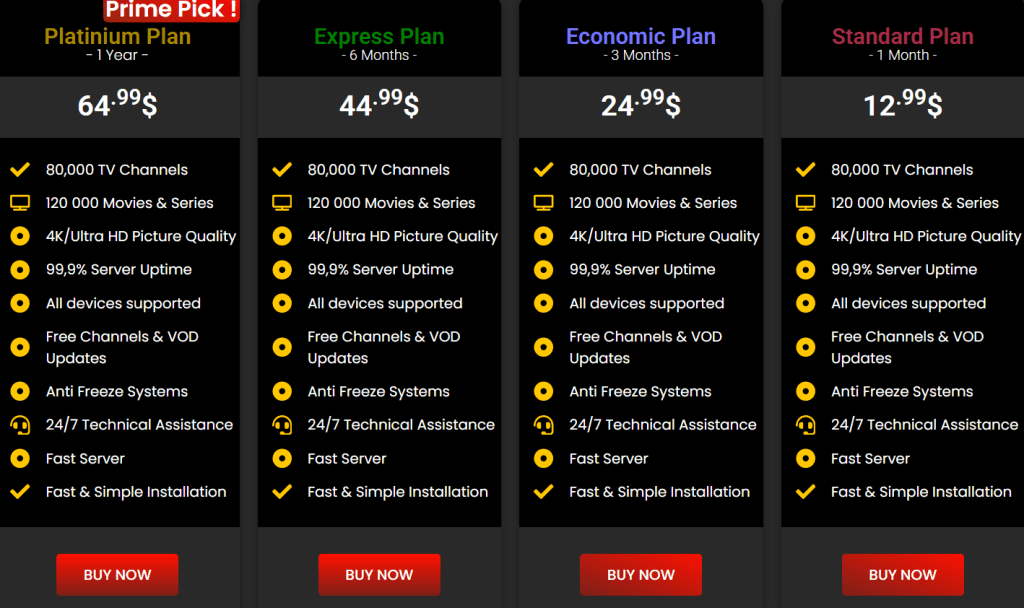
If your cable bill makes you weep, you’re not alone. The average cable subscriber in 2026 pays around $120/month after all the add-ons – broadcast fees, regional sports surcharges, HD technology fees, and that mysterious “regulatory cost recovery” that no one explains. Meanwhile, a premium IPTV Trends subscription costs as little as $15/month. That’s a saving of over $1,200 a year. Imagine what you could do with that cash – a weekend getaway, a new gaming console, or just a year’s supply of gourmet coffee.
Channel Selection: Quantity vs. Quality
Cable offers a few hundred channels, many of which you’ll never watch (anyone need three home shopping networks?). IPTV, on the other hand, gives you access to thousands of channels from every country imaginable. Want to watch Japanese variety shows, French news, or live cricket from India? Done. With IPTVTrends, you get a global library that would make cable blush. Plus, you can record shows to a cloud DVR or watch them on demand.
Flexibility: Watch Anywhere or Stuck on a Couch
Remember the agony of missing your favorite show because you were stuck in traffic? With cable, you’d have to wait for a rerun or set the DVR – assuming it didn’t fail. IPTV lets you watch live and recorded content on your phone, tablet, laptop, or TV. You can start a movie on your living room TV, pause it, and finish it on your phone while waiting at the dentist. Cable can’t do that without expensive multi-room DVR setups.
Wanna try out our IPTV service ? Click HERE and get an IPTV FREE Trial Account NOW !
Picture Quality: 4K, HDR, and the Latency Trap
Cable has been slow to adopt 4K. Most cable broadcasts are still 1080i or 720p, and even then, compression can make it look blocky. IPTV services like IPTV Trends offer native 4K HDR streams for movies, sports, and major events – as long as you have a decent internet connection (25 Mbps or higher). The only caveat? Latency. Live sports on IPTV might be 30–60 seconds behind the real action, while cable is nearly real-time. But honestly, that delay rarely matters unless you’re live-tweeting every goal.
Reliability: Buffering vs. Blackouts
This is the big one. Cable is reliable because it’s a dedicated physical line. IPTV depends on your internet. If your Wi-Fi drops, so does your stream. But modern fiber and 5G connections have made buffering a rarity. And let’s not forget: cable blackouts during storms are a thing. IPTV works anywhere you have internet – even on your phone during a power outage (if your phone still has battery).
For most users, the IPTV vs cable TV 2026 reliability debate comes down to internet quality. If you have a stable 50 Mbps connection, IPTV wins hands down.
Setup: DIY vs. Technician Visit
Setting up cable requires scheduling a technician, waiting for a 4-hour window, and then paying an installation fee. IPTV? You can be watching within 10 minutes. Download the app, enter your M3U URL or login credentials, and boom – you’re live. It’s so easy that even my technophobe uncle managed it.
If you want a step-by-step guide, check out our complete IPTV setup guide.
Why IPTV Trends Wins the Cord-Cutting War
Okay, I’ve been hinting at it, but let’s get explicit. IPTV Trends isn’t just another IPTV provider – it’s the one that treats you like a human. No contracts, no hidden fees, and a support team that actually responds in minutes, not days. Their channel list covers everything from live sports (NFL, NBA, Premier League, F1) to movies, kids’ shows, and international content.
But the real kicker? IPTV vs cable TV 2026 isn’t even a fair fight when you consider that IPTVTrends offers a free trial. Cable won’t give you a free month. They’ll lock you into a two-year contract. With IPTV Trends, you can test the waters risk-free and see how much better life on the other side is.
My personal experience? I switched during the 2026 World Cup (yes, the 2026 World Cup on IPTV Trends was flawless) and haven’t looked back. I’m saving $1,100 a year, watching more content than ever, and I can take my TV with me anywhere. That’s the kind of freedom cable can only dream of.
Wanna try out our IPTV service ? Click HERE and get an IPTV FREE Trial Account NOW !
Real Talk: When Cable Still Makes Sense
I’m not a fanboy who pretends IPTV is perfect. Cable still has its place. If you live in a rural area with satellite internet or DSL slower than 10 Mbps, cable might be more stable. Also, if you’re someone who absolutely needs the lowest latency for live betting or real-time stock trading (and you watch them on TV), cable’s fraction-of-a-second advantage matters.
But for 95% of people, especially those in urban and suburban areas with broadband, IPTV vs cable TV 2026 is a no-brainer. IPTV is cheaper, more flexible, and offers a world of content. The only thing you lose is the cable company’s annoying phone calls trying to upsell you.
FAQs – Everything You Wanted to Ask but Were Afraid to Google
- Is IPTV legal in 2026?
Yes, IPTV is completely legal as long as the provider holds proper licensing. IPTV Trends offers legally sourced content. Always choose a reputable service to avoid pirated streams.
- Do I need a smart TV for IPTV?
Not at all. You can use a Fire Stick, Android box, Apple TV, smartphone, tablet, laptop, or any device that supports an IPTV app.
- What internet speed do I need for IPTV?
For standard HD streaming, 10 Mbps is fine. For 4K, aim for at least 25 Mbps. A wired connection is best, but good Wi-Fi works too.
- Can I watch live sports on IPTV?
Absolutely. IPTV Trends offers extensive sports coverage including NFL, NBA, Premier League, UFC, F1, and more. Many events are available in 4K.
- Will IPTV replace cable completely?
It already is! Millions have cut the cord. As internet infrastructure improves, IPTV will become the dominant form of television.
- Is IPTV reliable during peak hours?
With a quality provider like IPTV Trends and stable internet, peak hours are no problem. Buffering is rare when your connection is solid.
- Can I record shows with IPTV?
Yes, many IPTV services offer cloud DVR or local recording options. IPTV Trends includes a catch-up feature for many channels.
- What happens if my internet goes down?
You won’t be able to stream, but you can use mobile data as a backup. Cable also goes down during storms, so it’s a wash.
- Is IPTV cheaper than cable?
Significantly. IPTV subscriptions typically cost $10–$30/month, while cable averages over $100/month. You save hundreds per year.
- How do I switch from cable to IPTV?
Easy! Cancel your cable subscription, pick a provider like IPTV Trends, sign up for their free trial, install the app, and start streaming. Done.
Conclusion – Your Remote, Your Rules
The era of paying for channels you never watch and getting locked into contracts is over. IPTV vs cable TV 2026 is not just a comparison – it’s a declaration of independence for viewers. IPTV gives you control, choice, and significant savings. And with IPTV Trends, you get a premium experience without the premium price tag.
Still sitting on the fence? Try IPTV Trends with a free trial. I promise you’ll wonder why you didn’t switch sooner. Your remote, your rules – that’s the future of TV.
Ready to cut the cord? Get started with IPTV Trends today and never look back.