
Picture this: Room 412 calls the front desk at 9 PM on a Tuesday. The guest is fuming — their TV is frozen mid-match, pixelated like a mosaic art project gone wrong. Room 308 calls five minutes later with the exact same complaint. Meanwhile, the hotel next door? Every room is streaming flawlessly in crystal-clear HD, from the penthouse suite down to the smallest single.

What’s their secret? A properly configured HDMI encoder for hotel IPTV system multi rate. That’s it. That single piece of hardware — configured correctly — separates a hotel that guests rave about from one that racks up one-star reviews about the television. Let’s dig into exactly what it is, why it matters, and how to get it right the first time.
Wanna try out our IPTV service ? Click HERE & get an IPTV FREE Trial Account NOW !
What Exactly Is an HDMI Encoder for Hotel IPTV System Multi Rate?
At its core, an HDMI encoder takes a video signal — from a satellite dish, cable feed, camera, or media player — and converts it into a compressed digital stream that travels over your hotel’s IP network. Think of it like a translator that takes the raw language of broadcast television and turns it into fluent internet-speak that every smart TV, set-top box, and streaming device in your property can understand.
Now, add the phrase “multi rate” to that equation and things get really interesting. Multi rate encoding — sometimes called Adaptive Bitrate (ABR) encoding — means the encoder doesn’t produce just one single quality stream. It produces multiple streams at different bitrates and resolutions simultaneously. A 1080p stream for the guest on the high-speed wired connection in the executive suite. A smoother 720p stream for the room on the far end of the corridor with a slightly weaker Wi-Fi signal. A lean, efficient 480p fallback so that nobody — absolutely nobody — sees a frozen screen. The system serves the right quality to the right device automatically, in real time. It’s elegant, really.
Why Hotels Can’t Afford to Skip Multi Rate Encoding
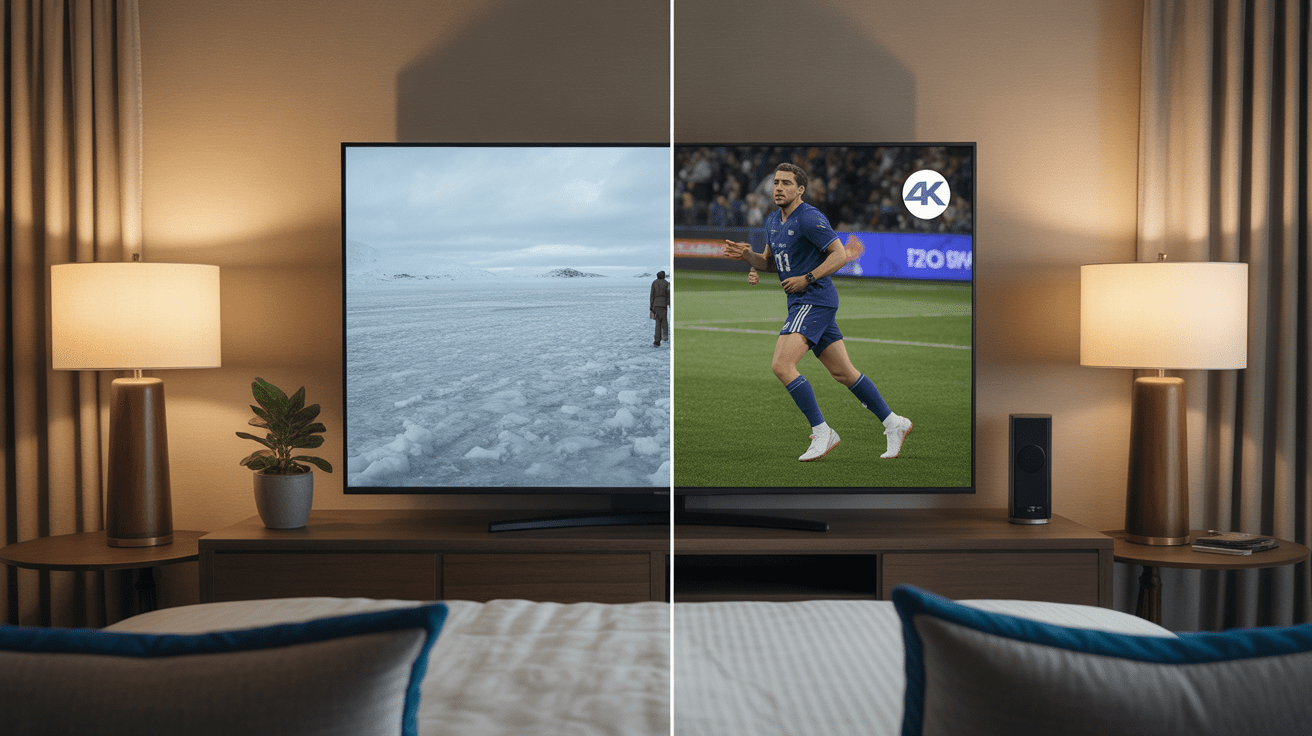
Here’s the rub: a hotel is not a home. A single-family household might have three or four devices fighting for bandwidth. A 200-room hotel? You could have 400 or 500 streams running simultaneously during peak hours — football finals night, a conference, New Year’s Eve. A fixed-bitrate encoder that churns out one heavy HD stream for everyone will absolutely choke your network during those peaks. And when the network chokes, the guest experience dies with it.
Multi rate encoding acts like a smart traffic management system on a motorway. Instead of every car travelling at the same speed regardless of conditions, traffic flows dynamically. Fast lane for those who can handle it. Slower lanes for the congested stretches. Everyone gets where they’re going. No pile-ups. No honking. No irate guests at the front desk.
If you’re building or upgrading a hotel IPTV infrastructure, you’ll also want to check out our deeper dive on how to choose an IPTV encoder for a large hotel — it covers capacity planning in serious detail.
Wanna try out our IPTV service ? Click HERE & get an IPTV FREE Trial Account NOW !
Key Technical Specs to Look for in an HDMI Hotel Encoder
Not all encoders are created equal. Walk into a trade show and you’ll be dazzled by a wall of hardware that all claims to be “professional grade.” So what actually separates a workhorse from a paperweight? Here are the specs that genuinely matter for a hotel environment:
Number of HDMI Input Channels
Hotels typically need to encode multiple sources simultaneously — sports packages, local channels, pay-per-view feeds, hotel information channels, even live lobby camera feeds. Look for encoders offering at least 4 to 16 HDMI inputs per unit, with the ability to daisy-chain or rack multiple units for larger properties.
Supported Codecs
H.264 (AVC) remains the workhorse of the industry — widely compatible with virtually every device made in the last decade. H.265 (HEVC) delivers the same quality at roughly half the bitrate, which is a network bandwidth dream for large hotels. Some premium units now support AV1 as well. For most hotel deployments, an encoder that handles both H.264 and H.265 gives you the best of both worlds — broad compatibility and efficiency.
Multi-Bitrate Output Profiles
This is the heart of the matter. A capable hotel encoder should let you configure at least three to five output profiles per channel simultaneously — for example, 1080p at 6 Mbps, 720p at 3 Mbps, 480p at 1.5 Mbps, and 360p at 800 Kbps. The more profiles you can define, the more granular your adaptive delivery becomes.
Streaming Protocol Support
Look for RTSP, RTMP, HLS, and UDP multicast support. HLS is king for compatibility with modern smart TVs and mobile devices. UDP multicast is essential for efficient delivery across large hotel networks without duplicating bandwidth for every single viewer.
Latency
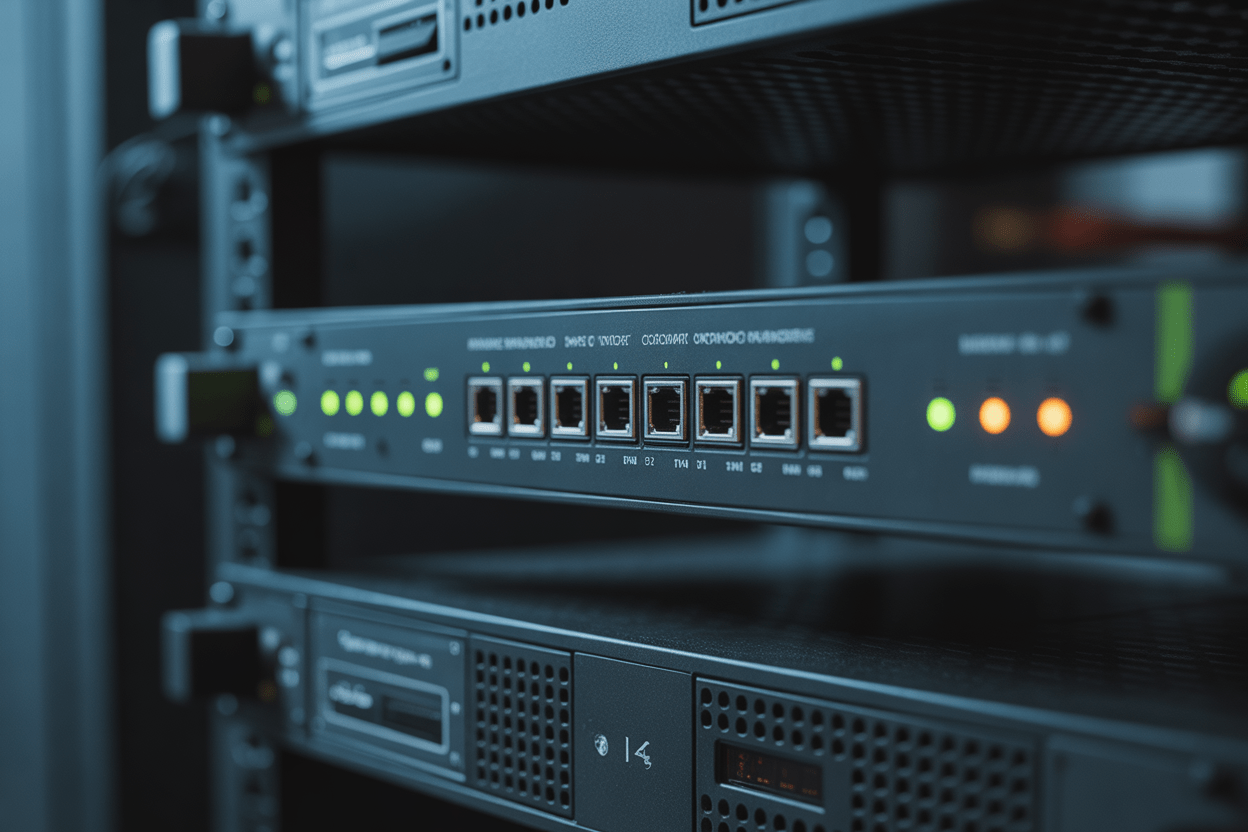
Live sports are the Achilles heel of high-latency systems. A guest watching a penalty shootout while hearing their neighbour cheer through the wall — three seconds earlier — is a miserable experience. Professional hotel encoders should deliver end-to-end latency under two seconds, with some achieving sub-500ms for truly live applications.
HDMI Encoder Comparison: Entry-Level vs. Professional Hotel Grade
| Feature | Entry-Level Encoder | Professional Hotel-Grade Encoder |
|---|---|---|
| HDMI Inputs | 1–2 channels | 4–16+ channels |
| Multi Rate Output | Single bitrate only | 3–5+ simultaneous profiles |
| Codec Support | H.264 only | H.264 + H.265 (HEVC) |
| Latency | 3–8 seconds | Under 2 seconds |
| Protocol Support | RTMP / HLS basic | RTSP, RTMP, HLS, UDP Multicast |
| EPG Integration | None | Full XMLTV EPG support |
| Redundancy / Failover | None | Dual power supply, failover streams |
| Typical Price Range | $150–$500 | $800–$5,000+ |
Spoiler: the entry-level encoder that seems like a bargain will cost you far more in support calls, complaints, and reputation damage than the professional unit ever would. We’ve written extensively about why investing in an IPTV encoder over $2,500 is genuinely worth it — the math makes sense when you think long-term.
Wanna try out our IPTV service ? Click HERE & get an IPTV FREE Trial Account NOW !
How Multi Rate Streaming Actually Works in a Hotel Network
Let’s walk through the real-world flow, because understanding this makes purchasing decisions so much clearer. Your HDMI encoder ingests the source signal — say, a satellite feed coming in via HDMI. It encodes that signal into multiple streams simultaneously, each at a different bitrate and resolution profile you’ve predefined in the encoder’s management interface.
Those streams are then pushed into your hotel’s IP network via a managed switch infrastructure. A middleware platform — think Ministra, Stalker, or a proprietary hotel TV management system — sits in the middle, managing what each room’s device requests. The set-top box or smart TV in each room communicates with the middleware, which then serves the appropriate quality stream based on that device’s available bandwidth at that exact moment. If bandwidth improves, it seamlessly upgrades to a higher quality tier. If it dips, it gracefully steps down. The guest never notices a thing. That’s the magic.
The Role of UDP Multicast in Large Properties
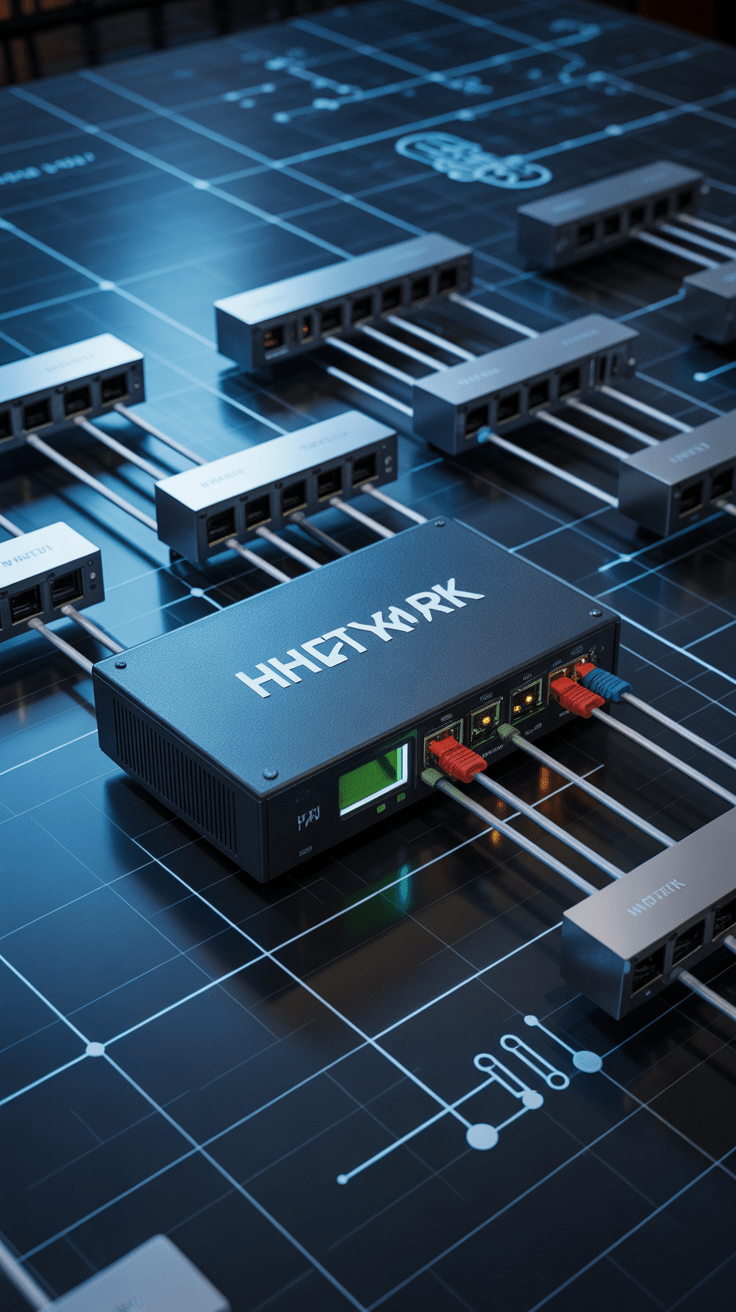
Here’s something most hotel operators don’t think about until it’s too late: if you’re serving live TV to 300 rooms using unicast streams (one individual stream per room), you’re multiplying your bandwidth demand by 300. That’s catastrophic. UDP multicast solves this beautifully — the encoder sends one stream per channel onto the network, and every device that wants that channel simply tunes into the same multicast group. Your 300 rooms all watch the same channel, but the network only carries one stream. Efficient, elegant, and absolutely essential for any hotel over 50 rooms.
Wanna try out our IPTV service ? Click HERE & get an IPTV FREE Trial Account NOW !
Installation and Configuration Best Practices
Even the best hardware in the world will underperform if it’s poorly installed. Here are the non-negotiables for a solid hotel IPTV encoder deployment:
Use a Managed Switch Infrastructure
Unmanaged switches cannot handle IGMP snooping, which is required for multicast to function correctly. Every switch in your hotel network should be a managed unit with IGMP snooping enabled. Full stop.
Separate Your IPTV VLAN
Traffic segmentation keeps your TV streams from competing with guest Wi-Fi browsing and your back-office systems. A dedicated VLAN for IPTV traffic, with QoS (Quality of Service) prioritization, ensures streams always get first-class treatment on the network.
Plan Your Bitrate Budget
Do the math before you deploy. If you’re running 50 channels at a peak bitrate of 6 Mbps each, that’s 300 Mbps of multicast traffic on your core network. Factor in headroom — aim to use no more than 70% of your available capacity to leave room for spikes.
Configure Redundant Encoder Streams
Professional encoders offer failover configurations. Set up a backup stream source so that if your primary input fails, the system automatically switches to a backup feed without any guest-facing interruption. In hospitality, zero downtime is the only acceptable standard.
Pairing Your Encoder with the Right IPTV Service

Hardware is only half the equation. Even a perfectly configured HDMI encoder for hotel IPTV system multi rate needs a reliable content source and distribution platform behind it. That’s where IPTV Trends comes in. Whether you’re encoding your own local broadcast sources or integrating with a premium IPTV content feed, having a truly reliable IPTV service in 2026 makes the difference between a system that impresses guests and one that embarrasses your brand.
IPTV Trends offers robust infrastructure, thousands of channels, EPG data integration, and the kind of uptime that hotel operators genuinely need. No surprise outages. No scrambling at 2 AM because the football channel went dark. Just clean, consistent streams that your encoder can distribute with confidence.
You should also explore the broader landscape of what’s possible with modern streaming infrastructure by reading about IPTV technology innovations in 2026 — because the industry is moving fast and the best hotel operators are staying ahead of the curve.
Wanna try out our IPTV service ? Click HERE & get an IPTV FREE Trial Account NOW !
Common Mistakes Hotel Operators Make with HDMI Encoders
- Buying single-channel encoders for a multi-channel requirement — and then wondering why they need a rack full of mismatched units six months later.
- Ignoring IGMP snooping — resulting in multicast traffic flooding the entire network and grinding everything to a halt.
- Configuring only one bitrate profile — defeating the entire purpose of multi rate encoding and leaving guests on weak connections with unwatchable streams.
- Skipping firmware updates — professional encoders receive regular firmware improvements that fix bugs, add codec support, and improve stability. Neglecting updates is leaving performance on the table.
- No monitoring in place — if you don’t have a system that alerts you when a channel drops, you’ll find out from an angry guest, not from your dashboard.
The ROI of Getting This Right
Let’s talk money for a moment, because operations directors and general managers care about returns. A properly deployed HDMI encoder for hotel IPTV system multi rate isn’t just a cost — it’s an investment with measurable returns. Guest satisfaction scores improve when entertainment works flawlessly. Review platforms like TripAdvisor and Booking.com frequently mention TV quality in reviews — positively when it’s great, devastatingly when it isn’t. Higher satisfaction scores drive higher occupancy rates and justify premium room pricing. The encoder that costs $2,000 more than the budget alternative pays for itself many times over in improved reviews alone, before you even factor in reduced staff time handling TV complaints.
According to Hospitality Net, in-room technology quality directly influences guest loyalty and repeat booking rates — making your AV infrastructure a competitive differentiator, not just a utility expense.
Ready to Transform Your Hotel’s Entertainment System?
If you’ve read this far, you already understand that a capable HDMI encoder for hotel IPTV system multi rate is not optional for a serious hospitality property — it’s foundational. The question isn’t whether you need one. It’s whether you’re going to pair it with the right IPTV platform to unlock its full potential. Wanna try out our IPTV service and see how IPTV Trends can power your hotel’s content delivery? Explore IPTVTrends plans today and give your guests the entertainment experience they actually paid for.
Conclusion
The gap between a hotel that guests remember fondly and one they quietly vow never to revisit can be as thin as the quality of a single HDMI encoder. Multi rate encoding isn’t a technical luxury — it’s the architecture of modern hospitality entertainment. Get the hardware right, configure it properly, pair it with a rock-solid IPTV service, and your in-room entertainment becomes a genuine competitive advantage. Your guests deserve a flawless experience from the moment they flip that remote. And now you have everything you need to deliver exactly that.
Wanna try out our IPTV service ? Click HERE & get an IPTV FREE Trial Account NOW !
Frequently Asked Questions
1. What does “multi rate” mean in the context of an HDMI encoder for hotel IPTV systems?
Multi rate means the encoder simultaneously produces multiple stream versions of the same content at different bitrates and resolutions — for example, 1080p, 720p, and 480p at once. The system then delivers the appropriate quality to each device based on its available bandwidth, ensuring smooth playback for every guest regardless of their connection strength.
2. How many HDMI inputs do I need for a hotel encoder?
It depends on how many simultaneous source channels you need to encode. A typical mid-size hotel might need 8 to 16 inputs to cover local channels, satellite packages, and hotel-branded content. Larger properties or those with extensive content packages should look at scalable multi-unit rack systems that can expand as needed.
3. Is H.265 better than H.264 for hotel IPTV?
H.265 (HEVC) delivers equivalent quality at roughly half the bitrate of H.264, which is a significant advantage for bandwidth-constrained hotel networks. However, H.264 enjoys broader device compatibility with older TVs and set-top boxes. The ideal setup uses H.265 where possible while maintaining H.264 fallback profiles for maximum compatibility.
4. What is UDP multicast and why is it important for hotels?
UDP multicast allows a single stream to be shared by all devices tuning into the same channel simultaneously, rather than delivering individual unicast streams to each room. For a 300-room hotel, this can reduce live TV bandwidth consumption by up to 99% compared to unicast delivery, making it essential for any large property.
5. Can I use a budget HDMI encoder for a small hotel with fewer than 50 rooms?
Technically possible, but not recommended. Even smaller hotels host events, accommodate sports fans, and deal with simultaneous peak viewing. Budget encoders lack redundancy, multi rate output, and proper protocol support. The risk of guest complaints and system failures outweighs the cost savings, especially when professional units are more affordable than ever in 2026.
6. What latency should I expect from a professional hotel HDMI encoder?
Professional-grade encoders designed for hospitality environments typically achieve under two seconds of end-to-end latency. Some specialized low-latency models achieve under 500 milliseconds, which is ideal for live sports broadcasting where synchronicity with audio from neighbouring rooms becomes noticeable.
7. Do I need middleware with my HDMI encoder?
Yes, for a full hotel IPTV system. The encoder handles signal compression and stream generation, but middleware manages the channel guide (EPG), room billing for pay-per-view, guest authentication, and content management. Popular middleware solutions for hotels include Ministra Pro and proprietary systems from hospitality TV vendors.
8. How does IGMP snooping affect my hotel IPTV system?
IGMP snooping is a feature on managed switches that intelligently routes multicast streams only to the ports where devices have requested them. Without it, multicast traffic floods every port on your network, consuming massive bandwidth unnecessarily and potentially degrading all network services. It’s a non-negotiable configuration requirement for hotel IPTV deployments.
9. How often should I update my HDMI encoder’s firmware?
Check for firmware updates at least quarterly, and always apply security-related patches promptly. Manufacturers regularly release updates that improve encoding efficiency, fix stability bugs, add codec support, and patch vulnerabilities. Keeping firmware current ensures you’re getting the best performance from your hardware investment and protecting your network.
10. Can IPTV Trends integrate with my hotel’s existing HDMI encoder setup?
Absolutely. IPTVTrends is designed to work seamlessly with professional encoder infrastructure, providing reliable content streams that your encoder can distribute across your property. Whether you’re encoding external sources or supplementing with IPTV Trends’ channel library via your middleware, the integration is straightforward and our team can guide you through the configuration process.