
Picture this: a business traveler lands at your hotel after a 14-hour flight. She checks in, kicks off her shoes, and reaches for the remote. The TV flickers. Buffers. Shows a black screen. She fires off a one-star review before she even orders room service. Sound familiar? Here’s the uncomfortable truth — the culprit is almost never the TV itself.

Nine times out of ten, it’s a broken link in the chain between your HDMI encoder, your hotel IPTV middleware integration, and the network carrying it all. Get that chain right, and you’ve got a guest who sleeps soundly and checks out smiling. Get it wrong, and your TripAdvisor rating takes a slow, painful nosedive. This guide is your road map to getting it spectacularly right.
Wanna try out our IPTV service ? Click HERE & get an IPTV FREE Trial Account NOW !
Why HDMI Encoder Hotel IPTV Middleware Integration Actually Matters
Let’s be honest — a lot of hotel IT managers treat the encoder and the middleware as two separate kingdoms that occasionally send diplomatic messages to each other. That siloed thinking is exactly where the problems start. HDMI encoder hotel IPTV middleware integration is not just a technical checkbox; it’s the foundation of every single guest interaction with your in-room entertainment system. Think of it like plumbing.
The encoder is the water pump — it compresses your source signals (satellite, cable, broadcast) into streamable video. The middleware is the entire pipe network, valve system, and faucet interface that delivers that water exactly where it’s needed, at the right pressure, at the right time. Disconnect them poorly and you get leaks everywhere. Connect them intelligently and the water flows perfectly to every room, every floor, every corner of the property.
For a deeper dive into why the encoder side of this equation deserves serious attention, check out our guide on how to choose an IPTV encoder for a large hotel — it covers hardware specs in meticulous detail that will complement everything we’re about to unpack here.
Understanding the Core Components: Encoders and Middleware Decoded
What Does an HDMI Encoder Actually Do in a Hotel Context?
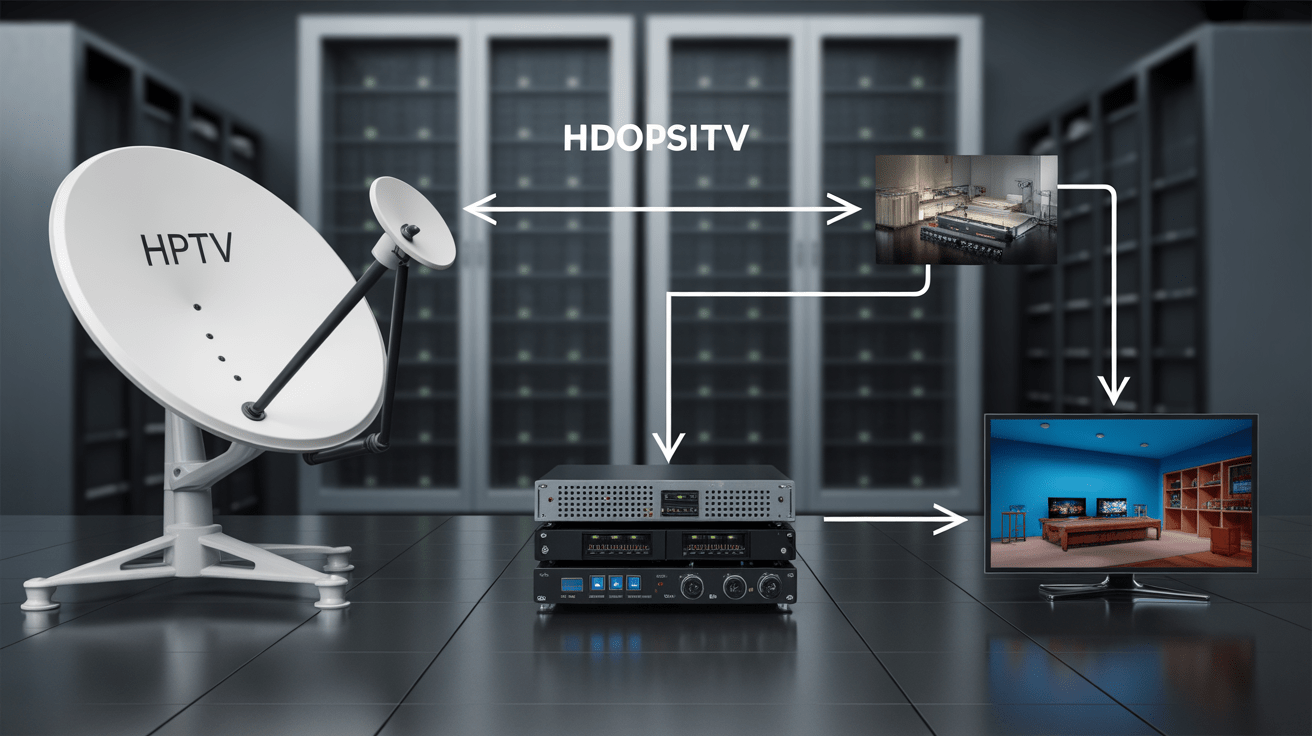
An HDMI encoder takes a raw video signal — say, a live sports broadcast from a satellite receiver or a local cable box — and converts it into a compressed digital stream (typically H.264 or H.265) that can travel across your IP network.
In a hotel, you’re usually encoding dozens of channels simultaneously. A multi-rate encoder (the kind we discuss extensively in the HDMI encoder for hotel IPTV system multi rate pillar) is especially powerful here because it outputs multiple bitrate versions of the same channel simultaneously — a high-quality stream for the 4K TV in the penthouse and a lighter stream for the tablet in the economy room. One encoder, multiple audiences, zero compromise.
Wanna try out our IPTV service ? Click HERE & get an IPTV FREE Trial Account NOW !
What Is IPTV Middleware and Why Is It the Brain of the Operation?
Middleware is the software layer sitting between your encoded streams and your guests’ screens. It handles everything from the interactive program guide (EPG) to VOD libraries, billing integration, room service menus, check-in information, and parental controls. Popular middleware platforms in the hospitality space include Amino, Enseo, Samsung LYNK, LG Pro:Centric, and Acentic. Each has its own API ecosystem, its own stream handling logic, and its own quirks that you need to understand before you start plugging in encoders.
The Integration Process: Step-by-Step
Step 1 — Map Your Signal Sources
Before you touch a single cable, inventory every signal source on your property. Satellite receivers, cable head-ends, local OTA antennas, security feeds, in-house promotional channels — list them all. Each one will need an HDMI (or SDI) input on your encoder. Knowing your source count determines how many encoder channels you need and what card configuration to order.
Step 2 — Choose Encoder Output Protocols That Match Your Middleware
Here’s the rub: not all encoders speak the same language as your middleware. Most enterprise middleware platforms expect streams delivered via RTSP, HLS, UDP multicast, or HTTP. Your encoder must support the exact protocol your middleware ingests. Mismatched protocols are the single most common — and most avoidable — integration failure. Always pull the middleware’s technical integration document before finalizing your encoder purchase. This is non-negotiable.
Step 3 — Configure Your Network for Multicast
UDP multicast is the gold standard for hotel IPTV because it delivers one stream to hundreds of rooms without multiplying bandwidth. But multicast needs specific network configuration — IGMP snooping on your managed switches, proper VLAN segmentation, and QoS policies that prioritize video traffic. Neglect this step and even the most expensive encoder-middleware combo will stutter like a nervous intern giving their first boardroom presentation.
Wanna try out our IPTV service ? Click HERE & get an IPTV FREE Trial Account NOW !
Step 4 — EPG Data Synchronization
Your guests expect an interactive program guide that tells them what’s on Channel 47 at 9 PM. The middleware pulls EPG data from an external provider (like Rovi or a regional listings service) and maps it to the channel numbers your encoder is streaming. Getting this mapping right — ensuring Channel 47 in the encoder’s output list corresponds to Channel 47 in the middleware’s EPG — requires careful, methodical work. A mismatch here means guests see a movie listing but get a cooking show. Chaos ensues.
Step 5 — Transcoding Profiles and Multi-Rate Output
This is where the magic of multi-rate encoding shines. Configure your encoder to output at least two or three bitrate profiles per channel. A typical setup might look like this:
| Profile | Resolution | Bitrate | Target Device |
|---|---|---|---|
| High | 1080p / 4K | 8–15 Mbps | Suite & Premium Rooms |
| Standard | 720p | 3–5 Mbps | Standard Rooms |
| Mobile | 480p | 1–2 Mbps | Tablets & Phones |
The middleware uses Adaptive Bitrate (ABR) logic to serve the right profile to each device dynamically, even mid-stream if network conditions change. Guests never see the machinery — they just see a crystal-clear picture.
Common Integration Pitfalls and How to Dodge Them
Firmware Incompatibility
Encoder firmware updates can silently break middleware API compatibility. Always test firmware upgrades in a staging environment before rolling them out property-wide. One hotel group I know pushed an encoder firmware update on a Saturday afternoon and spent the entire weekend fielding calls from 300 rooms with dead TVs. Don’t be that hotel.
Latency Mismatch on Live Sports
When guests are watching a live match and hear the crowd roar from the bar downstairs before they see the goal on their room TV, you have a latency problem. This typically happens when encoder GOP (Group of Pictures) settings don’t align with the middleware’s buffer settings. Aim for sub-three-second end-to-end latency for live sports — achievable with proper encoder tuning and a well-configured middleware pipeline.
Wanna try out our IPTV service ? Click HERE & get an IPTV FREE Trial Account NOW !
Licensing and DRM Gaps

Some premium content providers require DRM (Digital Rights Management) enforcement at the middleware level. Make sure your encoder supports encrypted output (DTCP-IP or HLS with AES-128 encryption) and that your middleware has a valid DRM license for the content you’re distributing. Overlooking this isn’t just a technical error — it’s a legal liability. For guidance on staying on the right side of content laws, our article on legal IPTV services in 2026 is required reading.
Choosing the Right Encoder for Middleware Integration
Not all encoders are created equal when it comes to middleware friendliness. Here’s a quick comparison of what to look for:
| Feature | Basic Encoder | Pro Hotel Encoder |
|---|---|---|
| Multi-rate output | Single bitrate only | 3+ simultaneous profiles |
| Protocol support | RTMP only | UDP, HLS, RTSP, HTTP |
| API / SNMP management | Web UI only | Full REST API + SNMP |
| DRM / Encryption | None | AES-128, DTCP-IP |
| Redundancy | Single input | Failover inputs, hot-swap PSU |
If you’re serious about a professional-grade setup, you might also want to revisit our deep dive on why investing in an IPTV encoder over $2,500 is worth every penny — the ROI argument becomes even stronger when you factor in middleware integration complexity.
Monitoring and Maintenance Post-Integration
Real-Time Stream Health Dashboards
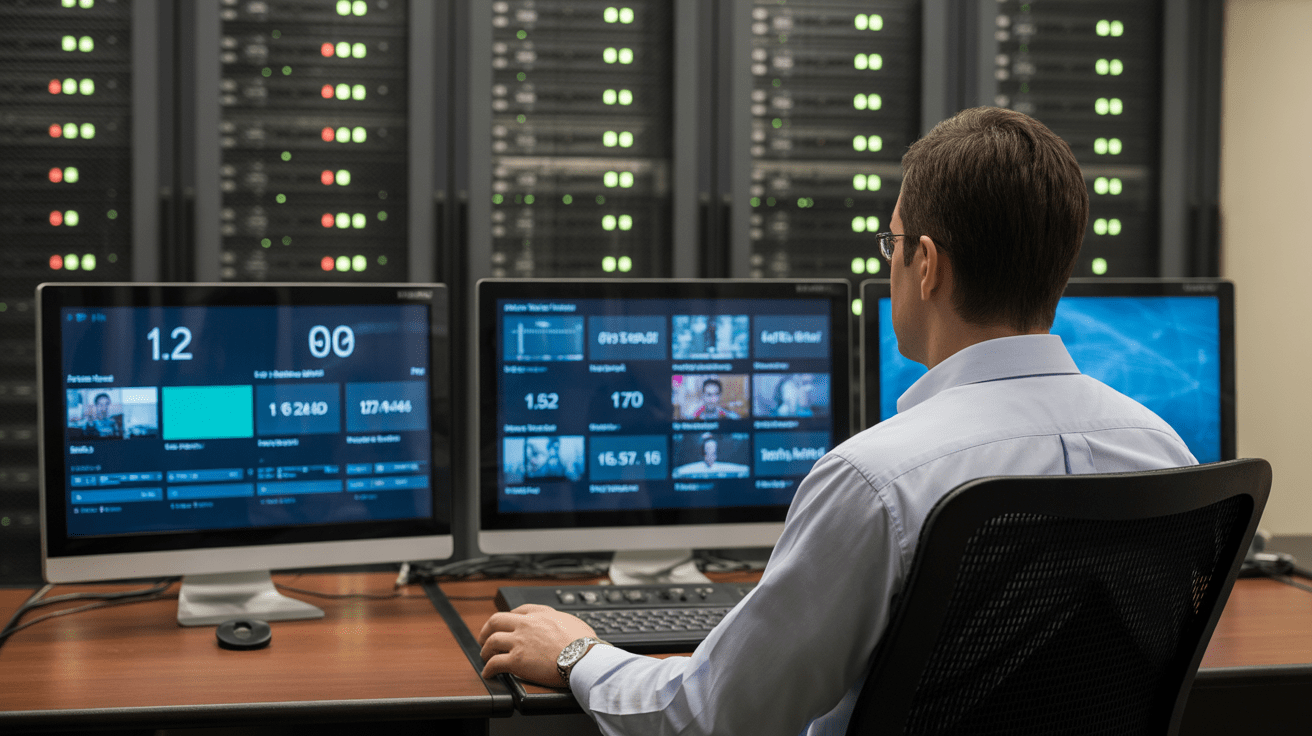
Once everything is live, your job isn’t done — it’s just shifted gears. Set up a real-time monitoring dashboard (most enterprise middleware platforms include one) that shows stream health for every channel, every room. Look for dropped frames, bitrate dips, and packet loss alerts. Proactive monitoring means you catch a failing encoder card at 3 AM before 80 guests wake up to a dead TV at 7 AM.
Scheduled Maintenance Windows
Schedule encoder reboots, firmware checks, and middleware database maintenance during low-occupancy periods — typically Tuesday to Thursday nights for business hotels, Sunday afternoons for leisure properties. Treat your IPTV infrastructure with the same respect you give your PMS or POS system. It’s just as mission-critical.
Wanna try out our IPTV service ? Click HERE & get an IPTV FREE Trial Account NOW !
The Guest Experience Payoff: Why This Investment Delivers
Here’s the bottom line: when your HDMI encoder hotel IPTV middleware integration is executed flawlessly, guests don’t notice the technology at all. And that’s the highest compliment your system can receive. They flip channels effortlessly, browse the VOD library, order room service through the TV, and check out happy.
Studies from hospitality research firms consistently show that in-room entertainment quality ranks in the top three factors affecting guest satisfaction scores. You’re not just installing cables and software — you’re engineering delight, one pixel at a time. And for hotels that want to extend the streaming experience beyond in-room TVs, platforms like IPTV Trends offer enterprise-ready streaming solutions that complement any hospitality middleware setup.
Ready to Build the Ultimate Hotel IPTV System?
Whether you’re retrofitting a 50-room boutique property or commissioning a 1,000-room resort, getting your HDMI encoder and middleware talking fluently to each other is the single biggest lever you can pull for guest satisfaction. Don’t leave it to guesswork. Don’t let mismatched protocols or ignored firmware updates torpedo your TripAdvisor rating. Build it right the first time, monitor it relentlessly, and your guests will reward you with loyalty — and five-star reviews.
Wanna explore IPTV solutions purpose-built for hospitality environments? Visit IPTV Trends today and let’s build something brilliant together.
Conclusion
HDMI encoder hotel IPTV middleware integration is the unsung hero of hospitality technology. It’s invisible when it works and catastrophically visible when it doesn’t. From mapping your signal sources and choosing the right output protocols, to configuring multicast networks and syncing EPG data, every step in this process is a chance to either delight or disappoint your guests.
The good news? With the right knowledge, the right hardware, and a thoughtful integration strategy, you can build a hotel IPTV system that runs like clockwork — quietly, reliably, and brilliantly — night after night. Your guests deserve nothing less. And frankly, neither does your reputation. For the full technical framework covering multi-rate encoding specifically, don’t miss the complete pillar guide on the HDMI encoder for hotel IPTV system multi rate — it’s the perfect companion to everything covered here.
Wanna try out our IPTV service ? Click HERE & get an IPTV FREE Trial Account NOW !
Frequently Asked Questions
1. What is HDMI encoder hotel IPTV middleware integration?
It refers to the process of connecting HDMI video encoders — which convert source signals into IP streams — with the middleware software platform that manages channel delivery, EPGs, VOD, and guest interfaces across a hotel’s IPTV system. When done correctly, it creates a seamless, high-quality in-room entertainment experience.
2. Which middleware platforms are most compatible with HDMI encoders in hotels?
Popular hospitality middleware platforms include Samsung LYNK, LG Pro:Centric, Enseo, Amino, and Acentic. Most enterprise-grade HDMI encoders support standard protocols (UDP, HLS, RTSP) that these platforms can ingest, but always verify compatibility documentation before purchasing.
3. What streaming protocol should I use — UDP multicast or HLS?
UDP multicast is ideal for live TV delivery to large numbers of rooms because it doesn’t multiply bandwidth with each viewer. HLS is better for VOD and mobile device delivery. Many hotel IPTV systems use both simultaneously — multicast for live channels and HLS for on-demand content.
4. How many encoder channels do I need for a 200-room hotel?
That depends on how many source channels you plan to distribute. A typical mid-scale hotel might carry 60–100 channels, so an encoder with that many inputs (spread across multiple cards or units) is the starting point. Factor in redundancy — having spare capacity is always wise in hospitality environments.
5. What causes latency in hotel IPTV live streams and how can I fix it?
Latency is usually caused by large GOP sizes in the encoder settings, oversized middleware buffers, or network congestion. Reduce your encoder’s GOP interval to 1–2 seconds for live sports, tune your middleware buffer settings to match, and ensure QoS is properly configured on your network switches.
6. Do I need DRM for hotel IPTV?
If you’re distributing premium or pay-TV content (sports packages, movie channels), yes — DRM is legally required. Make sure your encoder supports encrypted output and your middleware has the appropriate licensing agreements with content providers. Skipping this step creates legal exposure.
7. Can I integrate a hotel IPTV system with the property management system (PMS)?
Absolutely — and you should. Most enterprise middleware platforms offer PMS integration, enabling features like personalized welcome screens, express checkout via the TV, room service ordering, and automated billing. The encoder itself doesn’t connect to the PMS, but the middleware bridges that gap elegantly.
8. What is multi-rate encoding and why does it matter for hotels?
Multi-rate encoding means your encoder outputs the same channel at multiple bitrates simultaneously — for example, 1080p at 10 Mbps for suite TVs and 480p at 1.5 Mbps for mobile devices. The middleware uses Adaptive Bitrate (ABR) logic to serve the right quality to each device. It’s essential for large properties with diverse room types and device ecosystems.
9. How often should hotel IPTV encoders be maintained?
At minimum, perform a monthly health check — reviewing stream logs, checking firmware versions, and verifying encoder temperatures. Schedule full maintenance (including reboots and configuration backups) quarterly, always during low-occupancy windows. Proactive maintenance prevents the emergency 3 AM calls that nobody wants.
10. Is it worth hiring a specialist integrator for hotel IPTV middleware setup?
For properties with more than 100 rooms, yes — almost always. The complexity of protocol matching, network configuration, EPG mapping, and DRM compliance is significant. A specialist integrator pays for themselves by avoiding costly mistakes during initial deployment. For smaller properties, a knowledgeable IT team armed with the right vendor documentation can often handle it internally.